What is ghost gear, and why it looks different from plastic in satellite imagery
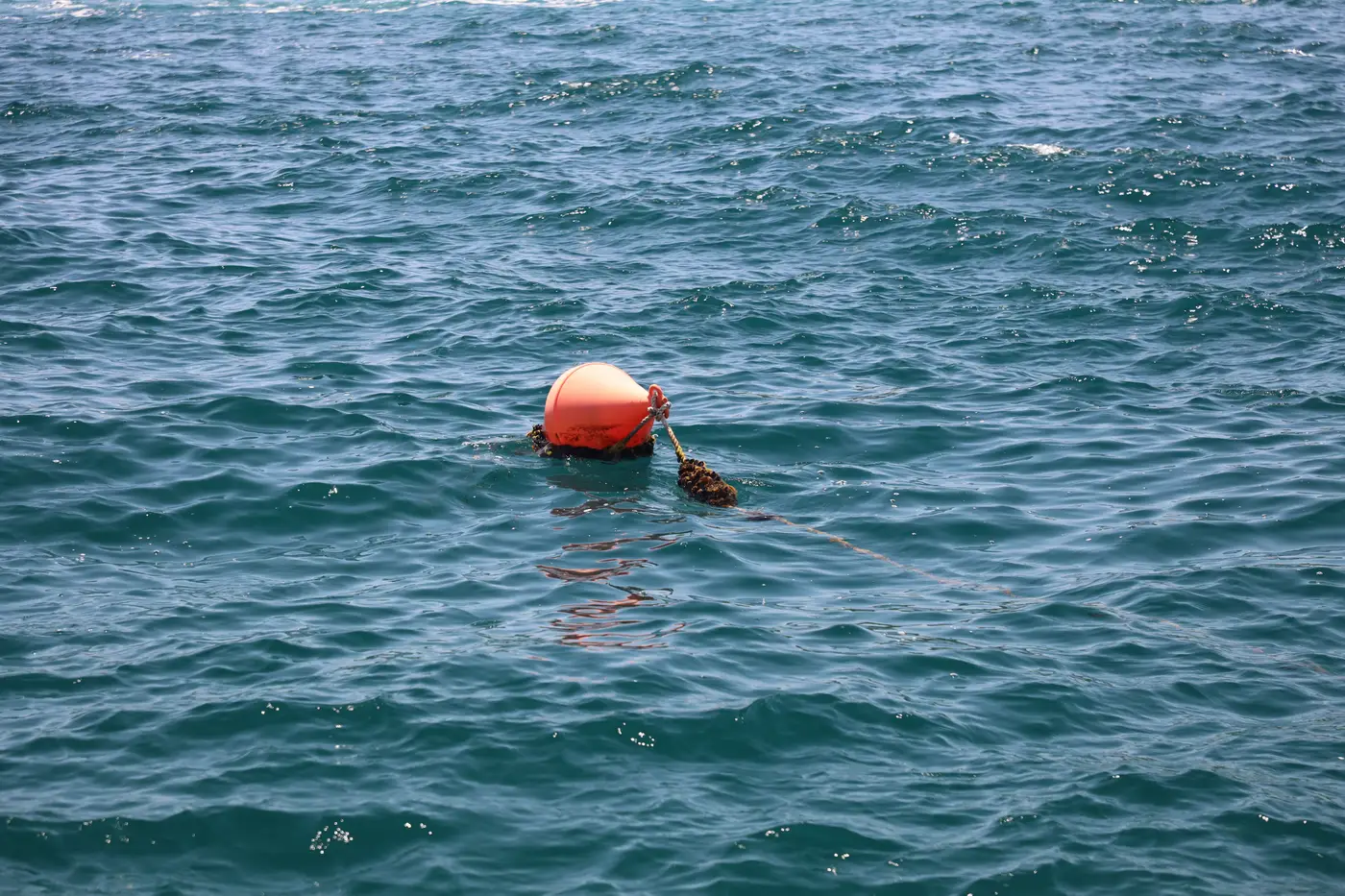
Ghost gear is the industry's catch-all for abandoned, lost, or discarded fishing gear: nets, longlines, traps, pots, buoys, the rope and webbing that comes off a vessel and keeps fishing on its own for years. It's not a side issue in the marine debris conversation. Derelict nets alone are a large share of the mass floating in gyres and coastal convergence zones, and they behave in the water column differently than the sheet plastic, fragments, and consumer waste most people picture when they hear "ocean plastic."
That behavioral difference is why a cleanup team scoping a transit needs to think about ghost gear as its own category, not a subset of generic debris.
What counts as ghost gear
Gear goes derelict for a mix of reasons: a trawl net parts under load, a trap line gets cut by a passing hull, a longline snaps in a storm and the float line keeps drifting. Some of it is lost gear that nobody chose to abandon. Some of it is gear cut loose deliberately because retrieving it wasn't worth the time. Either way, once it's in the water it keeps moving with currents and wind the same way any other floating object does, just with its own drag profile.
Material matters here. Most modern gear is monofilament nylon, high-density polyethylene, or polypropylene rope, chosen for strength and UV resistance, which also means it doesn't break down the way a thin plastic bag or bottle fragment does. A derelict net can stay semi-intact and tangled for a long time, picking up biofouling, trapping other debris, sometimes dragging a buoy or float pack that keeps part of it riding higher in the water.
Why ghost gear doesn't look like a plastic windrow from orbit
A plastic windrow, the kind that forms where converging currents or Langmuir circulation line up floating material into streaks, is usually a mix of low-profile, flat-lying debris: film plastic, fragments, foam. It sits mostly flush with the surface and tends to spread as a long, thin line following the convergence front.
Ghost gear aggregates differently. Netting tangles with itself and with whatever else it catches, so it tends to clump rather than streak, and the mass of a net ball or a trap line with its buoys attached rides with more vertical profile than a sheet of film plastic. Biofouling changes the surface too, adding algae and organic growth that shifts how the mass reflects light compared to bare, unweathered plastic.
That's the part that matters for multispectral imagery specifically. The whole reason wide-swath multispectral sensors can flag floating debris at all is that plastic, water, and organic material each reflect and absorb light across different bands in a distinct way. What a sensor actually registers is a material's reflectance curve across those bands, a signature with little to do with what color the material looks to the human eye. A tangled, biofouled net mass with buoys attached produces a different curve than a flat sheet of clean plastic film, and it sits in the water differently than a windrow of fragments does. A plastic windrow reads as a thin, elongated anomaly tracking a current line. A gear aggregation is more likely to read as a tighter, denser cluster, sometimes with a buoy or float signature standing apart from the tangle itself.
Ghost gear and plastic windrows form under different conditions and read as separate signals rather than one generic "floating plastic" bucket. Which one shows up more clearly from orbit shifts with gear type, weathering, and sea state.
What this means for where you send the vessel
An aggregation event flagged from satellite imagery gives a cleanup team or research transect a starting coordinate, nothing more. Confirming whether what's aggregating is ghost gear, a plastic windrow, or a mix of both still takes eyes on the water, because that detail decides what gets loaded on the vessel: a net recovery rig versus a skimmer, before anyone leaves the dock.
An event-driven map of where these aggregations are forming narrows down where to point a vessel in the first place, before fuel and crew time get committed to a transit based on a guess.
If scoping where debris and derelict gear are clustering before you commit a vessel sounds useful, Plastic Detection is worth a look.